An AI cliché checker scans your text for stock phrases that readers now link to machine-written content, such as "delve into", "unlock the full potential" or "in today's fast-paced digital landscape". Paste your draft above, and the tool marks each phrase, counts how many you use per 100 words and suggests a plainer option. It runs in your browser, so your draft stays private.
Why stock phrases hurt your writing
These phrases are not wrong English. The problem is that they say nothing. "Plays a crucial role" tells the reader that something matters but not why. "Unlock the full potential" promises a result without naming it. When readers see several of these in one paragraph, many stop trusting the page and leave.
Google's view is worth knowing too. Google says it rewards helpful content however it is made, AI or human. It does not punish a page for one cliché. It does look for content made for people, with real experience and a clear purpose. Generic filler works against all of that, so cutting it helps readers first and search second.
How to use the AI cliché checker
- Paste your text into the box: an article, a product page, an email or a directory description.
- Read the verdict. "Clean" means no stock phrases were found. "Light", "Noticeable" and "Heavy" show how often they appear.
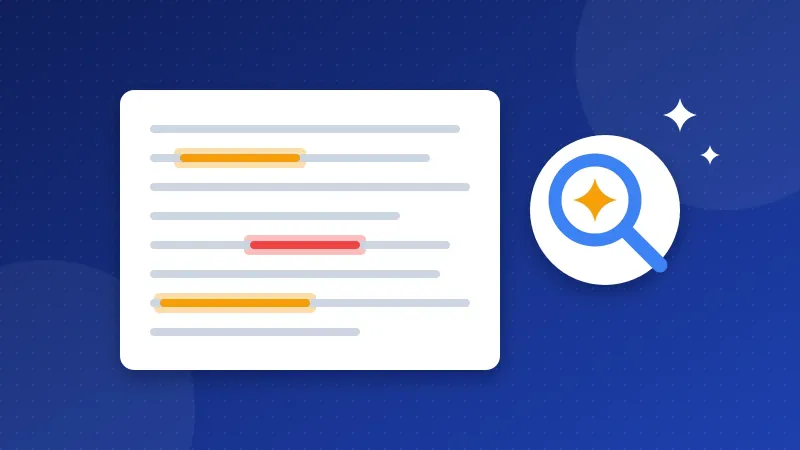
- Look at the marked text. Red marks are AI clichés, purple marks are hype words, amber marks are filler, and blue marks are style signs such as long dashes.
- Use the table. It lists each phrase once, how many times you used it and a plainer option.
- Rewrite, do not just swap. Replacing "delve into" with "explore" helps a little. Saying what you actually found helps a lot more.
The four kinds of phrases it flags
| Type | Examples | Better approach |
|---|---|---|
| AI cliché | delve into, a testament to, navigate the landscape, it's important to note | Cut the phrase and state the fact |
| Hype word | game-changer, seamless, robust, elevate, leverage | Name the real result or use a plain verb |
| Filler | in order to, due to the fact that, basically, very | Use the short form or remove it |
| Style sign | long dashes, "not only… but also", "it's not about X, it's about Y" | Make one direct claim per sentence |
The word list comes from the banned-phrase list we use for every Bloghints article, plus patterns that editors often mention. The WikiProject AI Cleanup guide on Wikipedia, for example, notes that AI text tends to use long dashes more often than most human writers. It also warns that this is only useful together with other signs, never on its own.
What this tool cannot do
This is not an AI detector, and it cannot tell you who wrote a text. Plenty of people wrote "in today's digital world" long before chatbots existed, and a careful AI draft can pass with zero flags. Treat the result as an editing aid:
- A high score means the text sounds generic, whoever wrote it.
- A low score does not prove the text is good. It can still be thin, wrong or unhelpful.
- Some flags are fine in context. "Very" in a quote or "journey" in a travel blog is not a problem.
A quick rewrite method
I use AI for first drafts now and then, and I am rarely happy with the result as it comes out. What helps is a simple routine:
- Delete the first paragraph if it only warms up. Start with the answer.
- Run the checker and fix every red mark first.
- Replace each vague claim with a fact, a number you can source or a short example from your own work.
- Read the text out loud. Anything you would never say to a friend gets rewritten.
- Check the result once more with the Word Counter to see your most repeated words.
Run the AI cliché checker on every draft before you publish, and on directory descriptions too. A short description written in plain words gets approved more often than one full of buzzwords. The Submission Kit Builder helps you fit that text to each form.
Frequently asked questions
Does this AI cliché checker detect AI-written content?
No. It finds phrases and patterns that make text sound generic, which is common in AI drafts but also in human writing. Use it to improve your text, not to judge who wrote it.
Will Google penalize my site for using AI phrases?
Google says it rewards helpful content no matter how it is produced, so a single phrase will not cause a penalty. Pages that are generic and add nothing new tend to perform badly, though, and stock phrases are often a sign of that.
What score should I aim for?
Aim for "Clean" or "Light", which means less than one flagged phrase per 100 words. Fix every red AI cliché first, then decide case by case on filler and style signs.