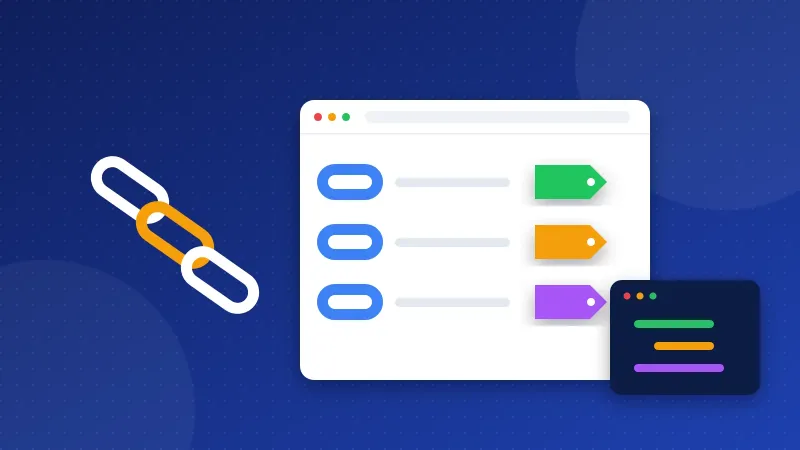
The right rel attribute for directory links depends on how the listing got there. A paid listing should carry rel="sponsored", a listing the site owner sent in should carry rel="ugc", and anything you would rather not vouch for gets rel="nofollow". You can combine them, for example rel="ugc sponsored".
I have run Bloghints since 2006, first as a hand-checked web directory and now as webmaster lists, tools and services listings. This guide shows each rel value in plain HTML, then explains which one we put on each kind of listing and what a listed site still gets from it.
What does the rel attribute on a link do?
The rel attribute sits inside an <a> tag. It tells browsers and search engines how your page relates to the page you link to. Visitors never see it. A link with a rel value still works, still opens the page and still sends visitors.
Some rel values speak to search engines. Others speak to the browser and have nothing to do with SEO. Mixing up the two groups is a common mix-up in old directory scripts.
The rel values for search engines
- nofollow: "I link to this, but I don't vouch for it." Google says to use it when the other values don't fit.
- sponsored: the link is an ad or a paid placement. Google calls this the preferred label for paid links, though nofollow is still accepted.
- ugc: short for user-generated content. The link came from a user, such as a comment, a forum post or a listing someone sent in.
The rel values for the browser
- noopener: a page opened in a new tab can't control the tab it came from. This is a safety setting.
- noreferrer: the browser doesn't tell the other site which page the visitor came from. It also includes noopener.
- external: the page belongs to another site. It only describes the link and is not one of Google's link labels.
What each rel value looks like in HTML
Here is the same link written five ways. Only the rel part changes. Spaces separate several values, and the order doesn't matter.
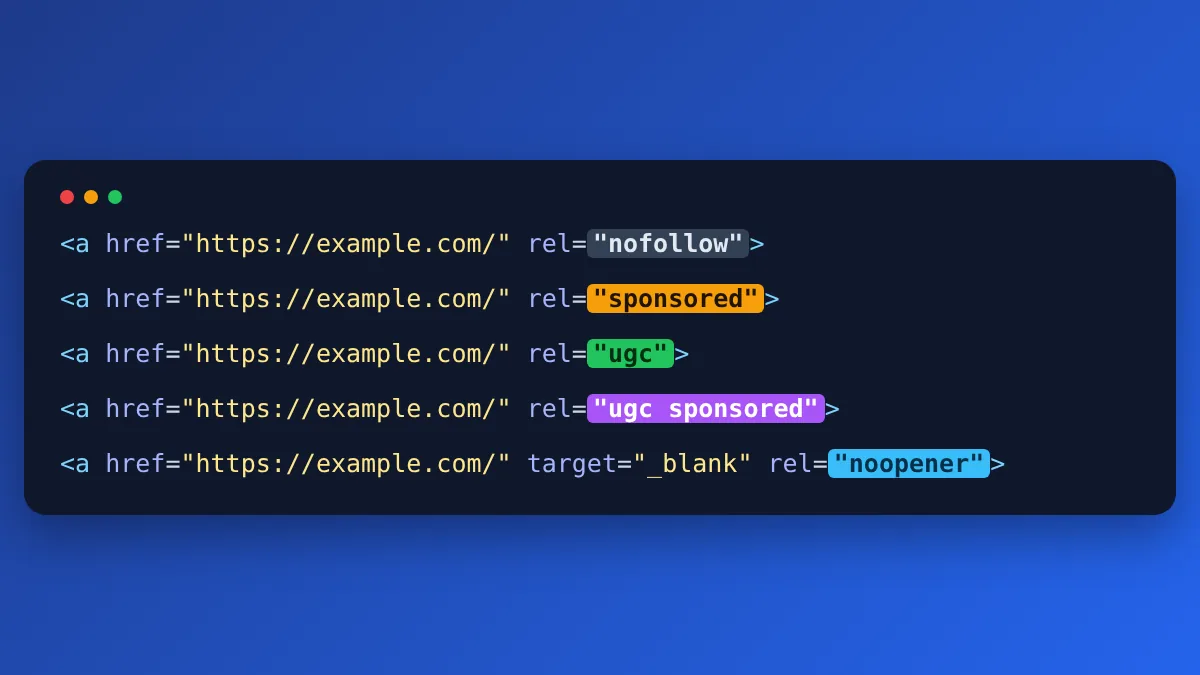
If you prefer to copy the code, here it is as text:
<a href="https://example.com/" rel="nofollow">Example</a><a href="https://example.com/" rel="sponsored">Example</a><a href="https://example.com/" rel="ugc">Example</a><a href="https://example.com/" rel="ugc sponsored">Example</a><a href="https://example.com/" target="_blank" rel="noopener">Example</a>
A link with no rel value at all is often called "dofollow". That word isn't real HTML. It just means the site added nothing, so search engines may treat the link as a normal vote.
Why directories label their links
Google lists "low-quality directory or bookmark site links" as an example of link spam. It also names buying or selling links that pass ranking credit. The same page says paid links are fine when you mark them with nofollow or sponsored. So the label is what keeps a paid listing on the safe side, for the directory and for the site in it.
I learned this the slow way. In my early years I submitted my own sites to paid and reciprocal directories, and I bought sitewide links. Back then my PageRank went up fast. After Google's crackdown on link spam in 2012, I stopped all of it. I tell that story in the backlink generators cheat sheet as a lesson, not as advice. Today a paid link without a label is a risk you take for both sides.
The old Bloghints directory ran on a directory script that stopped working with newer PHP. The About page has the full story. When I rebuilt Bloghints on its own CMS, I made the rel value part of the listing plan, so nobody has to remember it by hand.
Which rel attribute for directory links we use on Bloghints
Every listing on Bloghints is checked by hand before it goes live. The rel value follows two simple questions: did someone pay, and did the site owner write the listing?
| Listing | Free | Express | Featured |
|---|---|---|---|
| Webmaster Lists | nofollow | sponsored | sponsored |
| AI & SEO Tools | ugc nofollow | ugc sponsored | ugc sponsored |
| Services | nofollow ugc | nofollow ugc | ugc sponsored |
Paid links on Bloghints never pass ranking credit. That is a rule in the code, not a promise in a footer. Paid links also get noopener for safety.
What a listed site still gets from a labelled link
A fair question: if the link is nofollow or sponsored, why list at all? I would never sell a listing as a ranking boost. But a labelled link is not a dead link, and here is what it can still do.
- Real visitors. People who browse a hand-checked list are looking for exactly that kind of site. A click from them is worth more than a link nobody follows.
- A page about you that can rank. Tools and services get their own listing page on Bloghints, with what they do, a quick answer and an FAQ. That page can show up when people search for your name plus your service.
- A hint, not a wall. Since 2019, Google treats nofollow, sponsored and ugc as hints. It decides case by case how to use them, and a linked page can still be found and crawled.
- A safe link profile. A labelled paid link can't hurt you the way an unlabelled one can. Most real sites earn a mix of normal and labelled links anyway.
- Trust from visitors. A "Sponsored" or "Featured" label tells people the deal up front. In my directory years, featured listings sold reasonably well, and a clear label is part of what makes a paid spot feel fair.
Keep your expectations realistic. A listing helps people find you and gives search engines a clean signal. It won't push a weak page to the top on its own.
How to check the rel value on any link
- Right-click the link and choose Inspect.
- Look inside the
<a>tag forrel="…". - No rel, or only noopener, means search engines may treat it as a normal link.
Before you pay any directory, check one of its current paid listings this way. The directory submission guidelines and the paid directory list help you judge the rest. To learn more about links in general, start with what backlinks are.
The short version: pick the rel attribute for directory links by asking who paid and who wrote the listing, then label it honestly. If you want your site, tool or service listed this way, use the Bloghints submit page.
Frequently asked questions
Is a nofollow directory link worth anything for SEO?
It doesn't pass ranking credit the way a normal link can. Google treats it as a hint, though, and it can still bring visitors and help people find your page. Count it as visibility, not as a ranking boost.
Can I use nofollow instead of sponsored for paid listings?
Yes. Google still accepts nofollow on paid links, but it prefers sponsored because it says exactly what the link is. You can also use both together.
Should a free directory listing be dofollow?
It can be, if a person checked the site and the directory is happy to vouch for it. Many directories add nofollow or ugc anyway, because they can't recheck every site all the time. What matters most is that no money changed hands for a normal link.